Why the desert flowers in February
After the winter rains, the valley turns briefly green and gold. What blooms, where to find it, and why it lasts only a few weeks.
 Khalid Al-HarbiHead naturalist and guide
2 min read
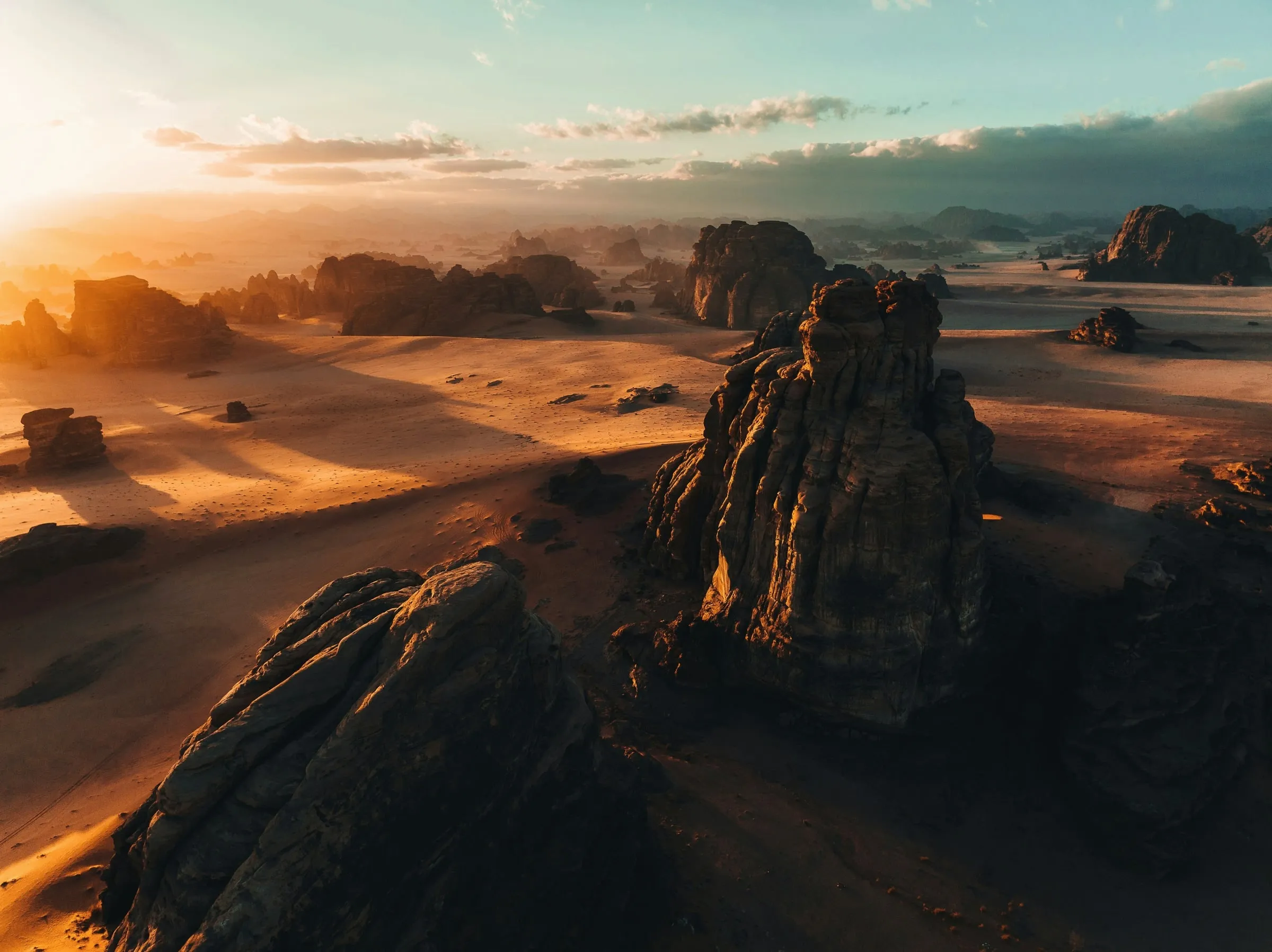
For most of the year the valley is sand, stone and the grey-green of acacia. Then, in a good year, a few days of winter rain in December or January change everything. By February the wadi beds are carpeted in green, and the dunes are dotted with yellow and purple flowers. Within six weeks it is gone.
What happens after the rain
AlUla receives barely fifty millimetres of rain in a year, most of it in a handful of storms. The seeds of desert annuals can lie in the sand for years, waiting for enough water to complete their whole lives in one short burst. When the rain comes they germinate within days, flower within weeks, and set seed before the soil dries out again in March.
Perennials respond too. The acacias put out new leaves, the wild capers along the cliff bases flower white and pink, and the low shrubs in the wadis turn briefly green.
What to look for
- Desert hyacinth: a spike of yellow flowers that seems to grow straight out of the sand. It is a parasite, drawing water from the roots of nearby shrubs.
- Wild lavender and desert chamomile: low purple and white flowers in the gravel plains, which scent the air after a cool night.
- Colocynth: trailing vines with yellow flowers and round green fruit like small melons. They are bitter and poisonous, and were used in old Bedouin medicine.
- Acacia blossom: small yellow puffballs on the old trees in the wadi beds, busy with bees.
The flowers bring insects, and the insects bring birds. February is the best month for desert larks, wheatears and the hoopoes that probe the soft ground for grubs.
Where to find them
The best displays are in the side wadis where water collects and the sand is deepest. Our morning canyon hike passes through two of them, and in February we often slow down to a botanist’s pace. If you want to go further, ask your host for a private walk with our naturalist, who keeps a record of every species flowering in the valley each year.
A year is never the same twice
Some winters bring no rain at all, and the valley stays bare. Others bring so much that the wadis run with water for a day. We cannot promise flowers in February, only that if the rain comes, it is one of the most beautiful things you will see in the desert. Ask us in January, and we will tell you how the season is shaping up.
Written byKhalid Al-HarbiHead naturalist and guide, with us since 2021