Hegra, slowly: a morning among the tombs
How to see Saudi Arabia's first World Heritage Site without the rush: when to go, what to look for in the carvings, and why the quiet tombs are the best ones.
 Khalid Al-HarbiHead naturalist and guide
2 min read
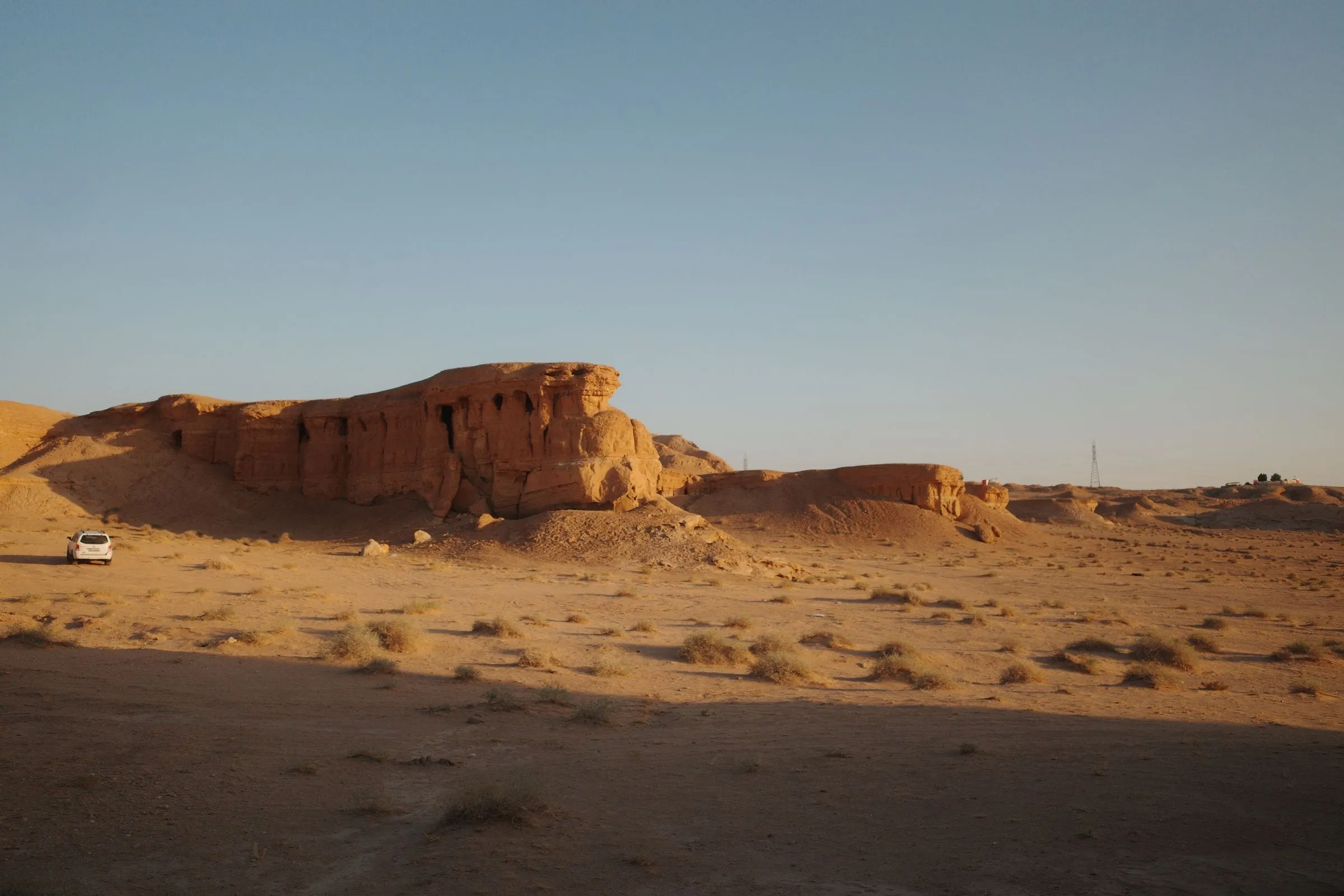
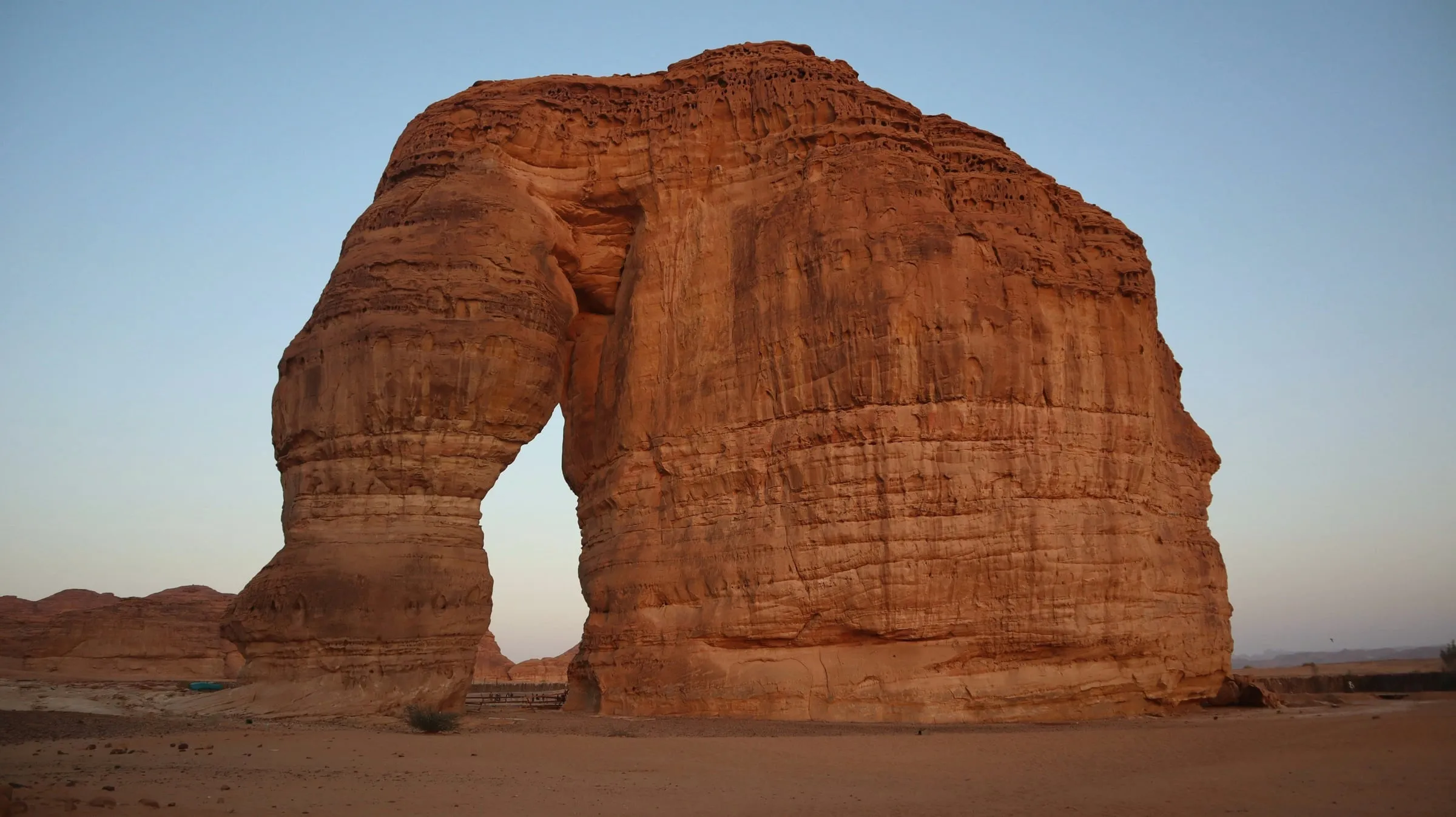
Two thousand years ago, Hegra was the Nabataeans’ southern city, a stop on the incense road where caravans rested on the way north to Petra. What survives are more than a hundred tombs cut into the sandstone outcrops, many with their inscriptions still sharp. Most visitors see four or five of them in an hour. We think it deserves a morning.
Go early, and go slowly
We leave the resort at half past seven, so we reach the site as it opens and the low sun picks out every chisel mark. By eleven the light flattens and the rock turns pale; at eight it glows a deep orange and the shadows give the facades their depth.
Plan on three to four hours. Our archaeologist walks with you, and there is coffee and dates in the shade of an outcrop halfway through. Wear closed shoes: the sand between the tombs is soft and the rock edges are sharp.
Reading a facade
Every tomb front follows a pattern, and once you can read it, the site opens up.
- The crow steps at the top, like a staircase climbing in from each side, are a Nabataean signature borrowed from Mesopotamia.
- The eagle above many doorways stood for the god Dushara, though most were defaced in later centuries.
- The inscription panel above the door names who commissioned the tomb, who may be buried in it, and the fine payable to the king by anyone who disturbs it. Several date the work to the year and name the stonemason.
The largest tomb, Qasr al-Farid, stands alone on its own rock and is the one in every photograph. It was never finished: the lower part of the facade is still rough, so you can see how the masons worked from the top down.
The quiet ones
Our favourite stretch is Jabal al-Banat, a cluster of tombs on the far side of the site where most groups never go. Several were commissioned by women, whose names are carved above the doors. Sit in the shade there for ten minutes and you will hear nothing but wind and the occasional desert lark.
Inside, the tombs are plain chambers with burial niches cut into the walls. Please do not touch the facades: the sandstone is soft, and oils from hands darken it within a few seasons.
Practical notes
Hegra is forty minutes by car from the resort. Tours run on Monday, Wednesday and Saturday, or privately on any day. Entry, transport, the archaeologist and the coffee stop are included in the price of the experience. Bring a hat, sunglasses and a light layer for the drive back, when the air conditioning wins against the heat.
If you have time for only one excursion during your stay, make it this one.
Written byKhalid Al-HarbiHead naturalist and guide, with us since 2021