The falconer's morning
Before dawn in the mews with the birds, the hood, the glove and the quiet patience of an Arabian tradition that is older than the tombs of Hegra.
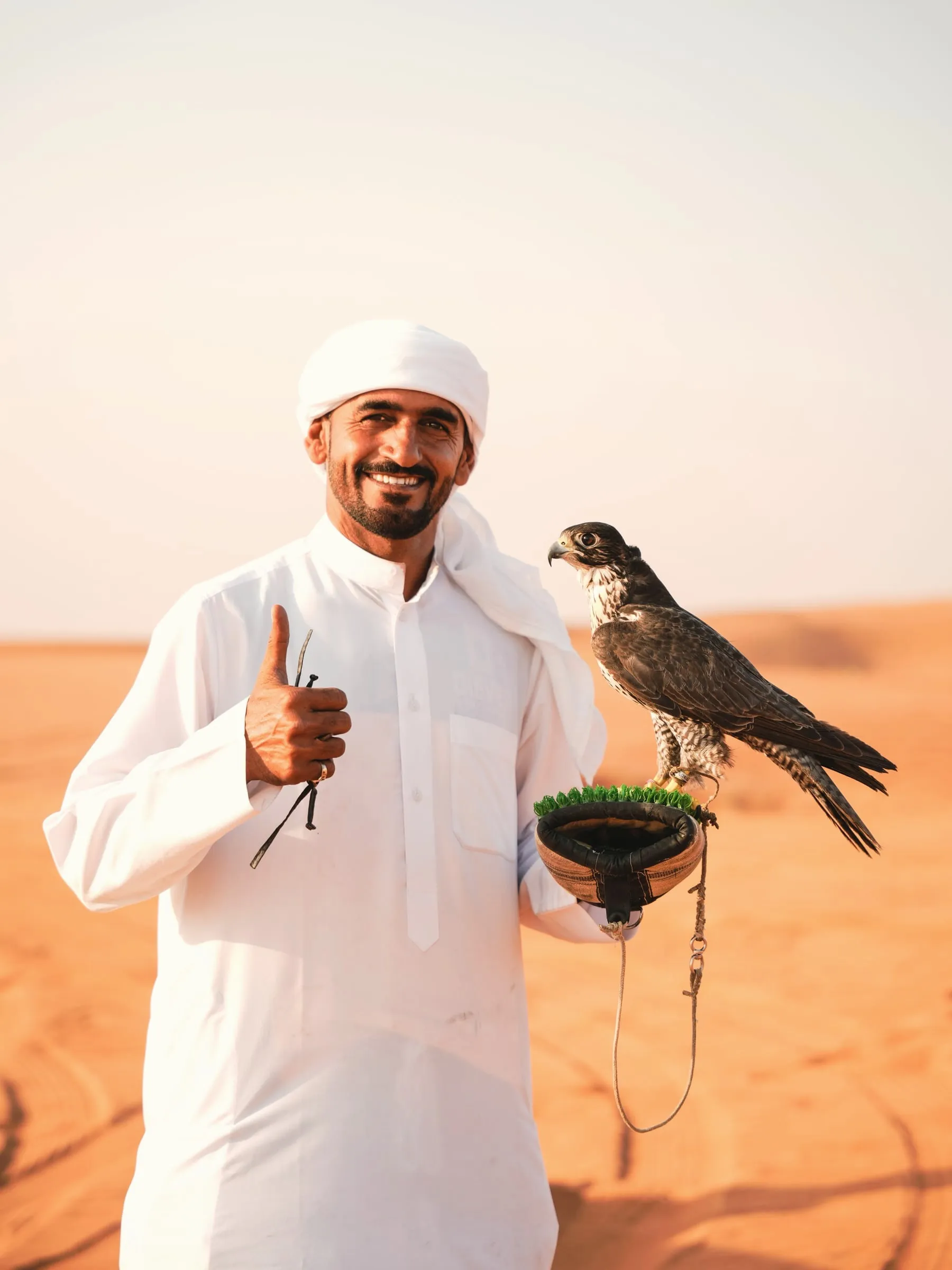 Saad Al-MutairiFalconer
2 min read
My day starts at five, an hour before the first guests wake. The falcons are in the mews behind the stables, each on its own perch, hooded and calm. I walk in quietly and say good morning to each of them by name. They know my voice before they know anything else.
A tradition older than the city
Falconry in Arabia is at least four thousand years old. Bedouin families trained falcons to hunt houbara bustards and hares through the winter, when there was little else to eat, and released them each spring to breed. Today it is one of the most loved traditions in Saudi Arabia, recognised by UNESCO as living heritage, and the best birds are treated like members of the family.
We keep four falcons at the resort: two sakers, a lanner and a peregrine. All were bred in captivity and none is ever used to hunt. They fly for exercise and for our guests.
The tools
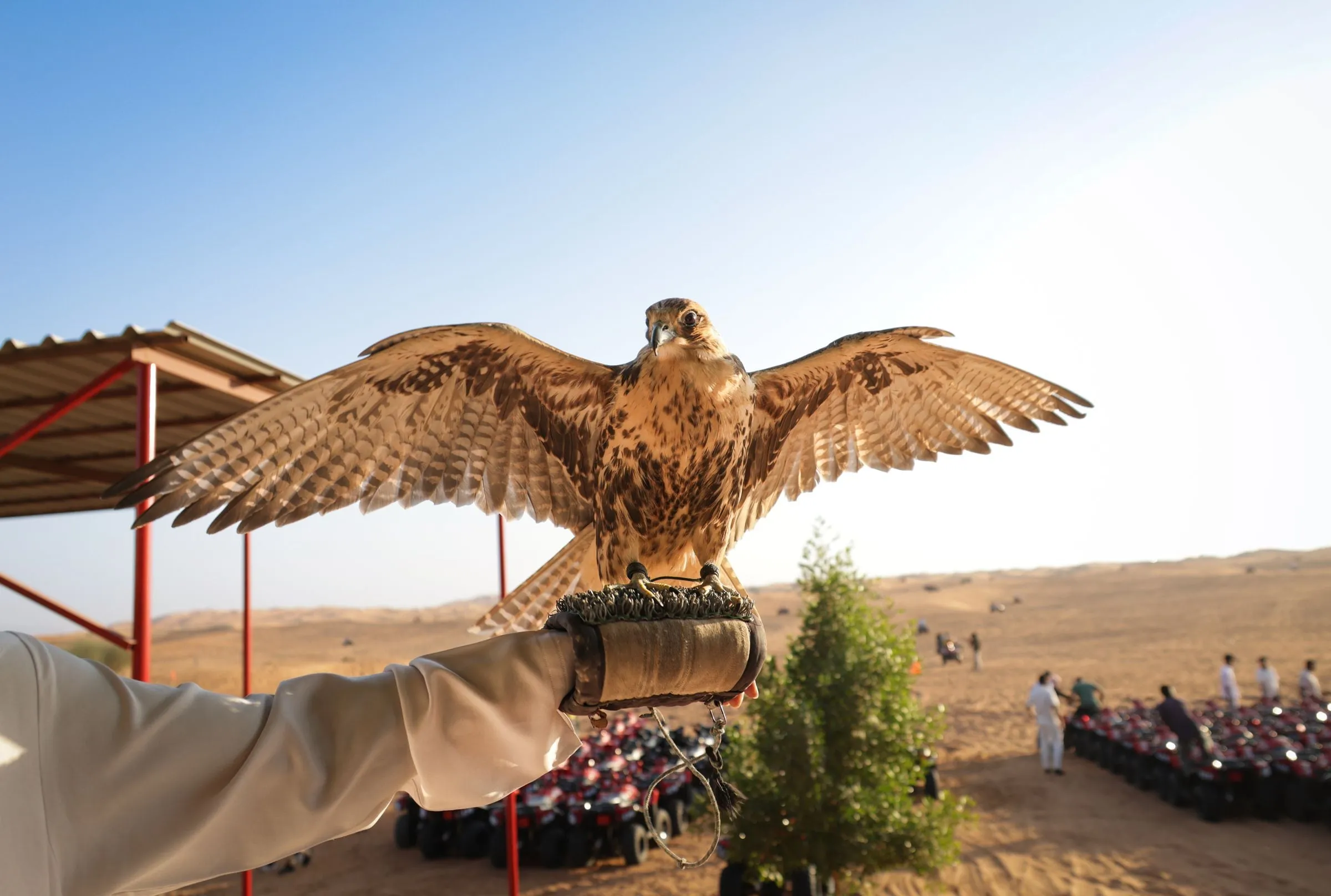
- The hood covers the falcon’s eyes and keeps it calm. A falcon sees eight times better than we do, and without the hood every movement would startle it. Ours are made of soft leather by a hood-maker in Riyadh, each fitted to one bird.
- The glove is thick leather that protects the falconer’s left hand from the talons. In Arabia we always carry the bird on the left.
- The lure is a weighted leather pouch swung on a cord, which the falcon chases in the air and takes for a reward.
What happens on a morning with us
Guests meet me at eight, when the light is soft and the air is still cool. I explain the birds and the tradition, and then we walk out onto the gravel plain beyond the stables. I unhood the first falcon and let her look around. Then she flies.
A peregrine in a stoop can reach three hundred kilometres an hour, and even swinging after a lure, the speed is astonishing. She circles high, folds her wings and drops, pulling up just above the ground to take the lure. Then she lands on my glove, eats her reward and looks at everyone as if she has done nothing special.
At the end of the morning, every guest who wants to wears the glove and has a falcon land on their own hand. Children usually go first, and they are often the calmest.
Patience
People ask how long it takes to train a falcon. The honest answer is every day, for the whole of its life. A falcon never becomes a pet. It chooses to come back to you each time, and the day you take that for granted is the day it flies away.
Mornings with the falconer run on Fridays and Sundays at eight. Gloves and hats are provided, and the minimum age is six.
Written bySaad Al-MutairiFalconer, with us since 2023